Showing posts with label Citations. Show all posts

Thursday, 12 September 2013

Modern Patristic scholarship

I thought these words by Archbishop Chrysostomos of Etna from a recent book review were a wonderfully pithy description of modern patristic scholarship, and something to keep in mind when reading the works of even Orthodox scholars from secular academic institutions, where such a presumptious and agenda-driven approach is not only favoured but required.
One of my misgivings about contemporary Patristic studies is that, while we pious Orthodox seek to find the common mind of the Fathers (the φρὸνιμα τῶν Πατὲρων) and study their writings by climbing the lofty peak of their spiritual insights and experience, secular Patristic scholars often mine that peak for predetermined thought deposits, sifting through the literary gravel of the dust that they thus collect and reducing it to rubble. They then arrange the surviving detritus into a peak or, more often I fear, a molehill of their own making, having lost the heights from which the Fathers write and missing the spiritual concord that allows us, in the first place, to speak of a common Patristic corpus as something more than a collection of writings compiled in historical sequence or according to some thematic scheme. 

That Orthodox scholars also navigate comfortably through talk about ”Chrysostomos,” ”Basil,” and ”Gregory,” et al., studying them with amateurish psychoanalytical imprecision and eschewing any appeal to their spiritual eminence, for fear that the ”objective” secular scholars who prevail today may ridicule them for ”religious tendencies,” is simply deplorable. These poor, insecure seekers after the approbation of the scholars du jour have rushed to be as fashionable as possible. Indeed, to the point of appearing comical in their efforts, they avoid with assiduity the one unpardonable transgression: referring to the Fathers with the title ”Saint” or any honorific designation, lest we attribute to them, in an egregious deviation from academic objectivity, anything but base and wholly mundane motivations in their lives and writings. Praeiudicium objectivum.

Orthodox Tradition, XXX:3 (2013), pp.17.

Saturday, 11 May 2013

Intellectual Arrogance and Anti-Intellectualism

A nice quote from St. Nikolai Velimirovic's Prologue of Ohrid ("Reflection" for 25 December) published in the latest issue of Orthodox Tradition (2013, vol. 2, p.59).
“The Lord Jesus, born in Bethlehem, was first worshipped by shepherds and wise men (astrologers) from the East — the simplest and the wisest of this world. Even today, those who most sincerely worship the Lord Jesus as God and Saviour are the simplest and the wisest of this world. Perverse simplicity and half-learned wisdom were always the enemies of Christ’s Divinity and His Gospel” [emphasis added].

Sunday, 28 April 2013

On Spiritual Reading - Elder Paisios of Mount Athos

I was lying comfortably on the sofa as I read this:
"Today with so much reading people end up like tape recorders, filling up their cassettes with superfluous matters. According to Abba Isaac, however, Wisdom not based on righteous activity is a deposit of disgrace. You see, many who are interested in sports read sports magazines and newspapers while they are sitting. They may be like the fatted calf, but they still marvel at the athletes. “Oh he is marvellous! He is great! Bravo!” But they don’t work up any sweat, and don’t lose any pounds. They read and read about athletic events, and then they go and lie down; they gain nothing. They are satisfied with the pleasure of reading. Some worldly people read newspapers, others romantic literature or an adventure novel, still others watch a football game at the stadium and pass their time. The same thing is done by people who read spiritual books. They may spend the whole night reading spiritual books with great intensity and be content. They take a spiritual book, sit comfortably, and begin reading. “Oh, I profited from that,” they say. It would be better to say, “I enjoyed myself, I spent my time pleasantly.” But this is not profit. 
"We profit when we understand what we read, when we censure ourselves and discipline ourselves by applying it: “What does this mean? Where do I stand in relation to this spiritual truth? What must I do now?” After all, the more we learn, the more responsibility we have to live up to what we have learned. I am not saying that we should not read so that we can plead ignorance and therefore be set free from responsibility, for this is a cunning deception; I am saying that we should not read merely to pass our time pleasantly. The bad thing is that if someone reads a lot and has a strong memory, he may remember many things and even talk a lot about what he has read, and thus deceive himself into thinking that he also personally observes the many things he reads. So he has created an illusion toward himself and others. So don’t be comforted by the thought that you read a lot. Instead, turn your attention to applying what you have read. Much reading alone will only educate you encyclopaedically."

From Elder Paisios of Mount Athos, Spiritual Counsels, Vol. II: Spiritual Awakening, Souroti, Thessaloniki: Holy Monastery “Evangelist John the Theologian”, 2008, pp.110-11.

Sunday, 10 March 2013

The Rules of Fasting

And when you fast, do not look gloomy like the hypocrites, for they disfigure their faces that their fasting may be seen by others. Truly, I say to you, they have received their reward. But when you fast, anoint your head and wash your face, that your fasting may not be seen by others but by your Father who is in secret. And your Father who sees in secret will reward you - Matthew 6:16-18
The above words of the Lord are probably the first and most important rule of fasting. With these to remind us of the spirit in which we should approach the Lenten Fast, I thought some might find the following text useful. It is taken from the introduction to The Lenten Triodion by Mother Mary and Archimandrite (now Metropolitan) Kallistos Ware (South Canaan, PA: St. Tikhon's Seminary Press, 2002). To complement the text in question, I have quoted the two final hymns we sang from the Triodion at Matins this morning (Sunday of the Last Judgement) as they deal with the nature and character of fasting:
Daniel the prophet, a man greatly beloved, when he saw the power of God, cried out: 'The court sat for judgement, and the books were opened.' Consider well, my soul: dost thou fast? Then despise not thy neighbour. Dost thou abstain from food? Condemn not thy brother, lest thou be sent away into the fire, there to burn as wax. But may Christ lead thee without stumbling into His Kingdom. 
Let us cleanse ourselves, brethren, with the Queen of virtues: for behold, she is come, bringing us a wealth of blessings. She quells the uprising of the passions, and reconciles sinners to the Master. Therefore let us welcome her with gladness, and cry aloud to Christ our God: O risen from the dead, who alone art free from sin, guard us uncondemned as we give the glory. 

THE RULES OF FASTING
"Within this developed pattern of Lent, what precisely do the rules of fasting demand? Neither in ancient nor in modern times has there ever been exact uniformity, but most Orthodox authorities agree on the following rules:
(1) During the week between the Sunday of the Publican and the Pharisee and that of the Prodigal Son, there is a general dispensation from all fasting. Meat and animal products may be eaten even on Wednesday and Friday.

(2) In the following week, often termed the 'Week of Carnival', the usual fast is kept on Wednesday and Friday. Otherwise there is no special fasting.

(3) In the Week before Lent, meat is forbidden, but eggs, cheese and other dairy products may be eaten on all days, including Wednesday and Friday.

(4) On weekdays (Monday to Friday) inclusive during the seven weeks of Lent, there are restrictions both on the number of meals taken daily and on the types of food permitted; but when a meal is allowed, there is no fixed limitation on the quantity of food to be eaten.

(a) On weekdays in the first week, fasting is particularly severe. According to the strict observance, in the course of the five initial days of Lent, only two meals are eaten, one on Wednesday and the other on Friday, in both cases after the Liturgy of the Presanctified. On the other three days, those who have the strength are encouraged to keep an absolute fast; those for whom this proves impracticable may eat on Tuesday and Thursday (but not, if possible, on Monday), in the evening after Vespers, when they may take bread and water, or perhaps tea or fruit-juice, but not a cooked meal. It should be added at once that in practice today these rules are commonly relaxed. At the meals on Wednesday and Friday xerophagy is prescribed. Literally this means 'dry eating'. Strictly interpreted, it signifies that we may eat only vegetables cooked with water and salt, and also such things as fruit, nuts, bread and honey. In practice, octopus and shell-fish are also allowed on days of xerophagy;* likewise vegetable margarine and corn or other vegetable oil, not made from olives.** But the following categories of food are definitely excluded:

(i) meat;
(ii) animal products (cheese, milk, butter, eggs, lard, drippings);
(iii) fish (i.e. fish with backbones);
(iv) oil (i.e. olive oil) and wine (i.e. all alcoholic drinks)

(b) On weekdays (Monday to Friday inclusive) in the second, third, fourth, fifth and sixth weeks, one meal a day is permitted, to be taken in the afternoon following Vespers, and at this one meal xerophagy is to be observed.

(c) Holy Week. On the first three days there is one meal each day, with xerophagy; but some try to keep a complete fast on these days, or else they eat only uncooked food, as on the opening days of the first week.
On Holy Thursday one meal is eaten, with wine and oil (i.e. olive oil).
On Great Friday those who have the strength follow the practice of the early Church and keep a total fast. Those unable to do this may eat bread, with a little water, tea or fruit-juice, but not until sunset, or at any rate not until after the veneration of the Epitaphios at Vespers.
On Holy Saturday there is in principle no meal, since according to the ancient practice after the end of the Liturgy of St. Basil the faithful remained in church for the reading of the Acts of the Apostles, and for their sustenance were given a little bread and dried fruit, with a cup of wine. If, as usually happens now, they return home for a meal, they may use wine but not oil; for on this one Saturday, alone among the Saturdays of the year, olive oil is not permitted.

The rule of xerophagy is relaxed on the following days:
(1) On Saturdays and Sundays in Lent, with the exception of Holy Saturday, two main meals may be taken in the usual way, around mid-day and in the evening, with wine and olive oil; but meat, animal products and fish are not allowed.

(2) On the Feast of the Annunciation (25 March) and Palm Sunday,*** fish is permitted as well as wine and oil, but meat and animal products are not allowed. If the Feast of the Annunciation falls on the first four days of Holy Week, wine and oil are permitted but not fish. If it falls on Great Friday or Holy Saturday, wine is permitted, but not fish or oil.

(3) Wine and oil are permitted on the following days, if they fall on a weekday in the second, third, fourth, fifth or sixth week:
First and Second Finding of the Head of St. John the Baptist (24 February)
Holy Forty Martyrs of Sebaste (9 March)
Forefeast of the Annunciation (24 March)
Synaxis of the Archangel Gabriel (26 March)
Patronal festival of the Church or Monastery****

(4) Wine and oil are also allowed on Wednesday and Thursday in the fifth week, because of the vigil for the Great Canon. Wine is allowed - and, according to some authorities, oil as well - on Friday in the same week, because of the vigil for the Akathistos Hymn.

It has always been held that these rules of fasting should be relaxed in the case of anyone elderly or in poor health. In present-day practice, even for those in good health, the full strictness of the fast is usually mitigated...In cases of uncertainty each should seek the advice of his or her spiritual father. At all times it is essential to bear in mind that 'you are not under the law but under grace' (Rom. 6:14), and that 'the letter kills, but the spirit gives life' (2 Cor. 3:6). The rules of fasting, while they need to be taken seriously, are not to be interpreted with dour and pedantic legalism; 'for the kingdom of God is not food and drink, but righteousness and peace and joy in the Holy Spirit' (Rom. 14:17)." - pp.35-37


Some additional clarifications
*While this is common, many authorities count things like octopus and shell-fish as 'oil', and do not permit them on days of strict fasting. This is the practice observed on the Holy Mountain, for example.
**It should be remembered that, while mention of 'oil' in the canons certainly refers to olive oil, vegetable oil and other such substitutes were not available at that time. The fact that olives may be eaten, but olive oil may not, would suggest that it's oil that one should fast from. Thus, while vegetable oil is permitted by some, others consider 'oil' to refer to any kind of oil, not just that made from olives.
***Some authorities do not allow fish on Palm Sunday.
****This applies to those people who are actually observing said festival.

Friday, 25 January 2013

Sermon Against the Pogroms

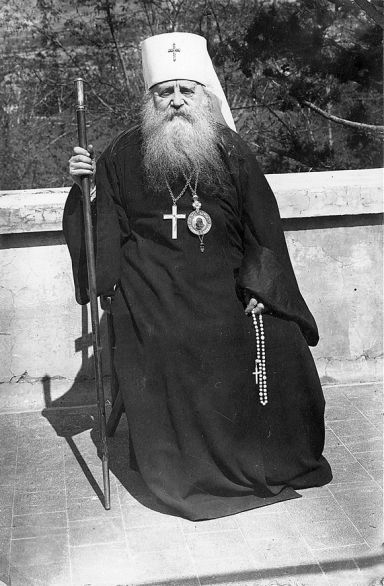
By Metropolitan Anthony Khrapovitsky of Kiev

An Orthodox response to the sin of anti-semitic persecution

Delivered in the Cathedral of Zhitomir on 20/04/1903


The joyous feast of reconciliation, the Resurrection of Christ, continues. We have completed the commemoration of the Thomas, who was the first to confess that the risen Jesus is our true God, and we are now singing of the deeds of the myrrh bearers. We commemorate those women who did not grow weak in their faithfulness to Christ even during the terrible days when He was betrayed and put to death, and who were accounted worthy to announce His resurrection to the apostles. The apostles would enlighten the world by proclaiming the resurrection, but these holy women had first enlightened the apostles with it.

In extolling their faith, the Church calls all of us to imitate this struggle and to participate in the preaching of the resurrection. We are called upon to become so penetrated by joy in Him that we not only forget about the evil done against us by enemies, but to forgive from our hearts their hatred toward us and not only forgive them, but even love our enemies. We must now strive to embrace with love all mankind, inviting them to share with us the spiritual ecstasy of that new life revealed so clearly to us, that everlasting life filled with blessed communion with God. Now is fulfilled that prophecy of Isaiah; "And everlasting joy ... illness, sorrow and sighing have, fled away" (Is 35:10).

The grace of Christ's resurrection shines brightly even in our corrupt age, and it shines not only on the pious but even on those who are unconcerned. During these sacred days, those who did not pray earlier now turn to prayer; even those whose hearts were hardened. We greet one another with the kiss of peace, and even the unmerciful and miserly find pleasure in showing love toward their neighbour. "Christ is risen and life springs forth" as the God-fearing voice of Chrysostom proclaims. But amidst such comforting circumstances in our Christian life, sorrowful, shameful news reaches us that in the city of Kishenev, on the very day of Christ's resurrection, on the day of forgiveness and reconciliation, there occurred the cruel inhuman massacre of unfortunate Jews.

At the very time when in the holy temples there was being sung, "Let us embrace one another and say 'brother' even to those who hate us..." yes at that very time, outside the church walls, a drunken, beastly mob broke into Jewish homes, robbing the peaceful inhabitants and tearing human beings into pieces. They threw their bodies from windows into the streets and looted Jewish stores. A second crazed, greed filled mob rushed in to steal the clothing and jewelry from the bloodied corpses, seizing everything they could lay hand on. Like Judas, these robbers enriched themselves with silver drenched in blood - the blood of these hapless human sacrifices!

O God! How did Thy goodness endure such an insult and offence to the day of Thy saving passion and glorious resurrection! Thou didst endure Thy terrible struggle so that we would be dead to sin and live in Thee (Rm.6:11), but here they cruelly and in a most beastly manner slaughtered those who are Thy relatives according to the flesh, who, though they did not recognise Thee are still dear to Thy heart as Thou Thyself didst say not long before Thou didst suffer in the flesh, "O Jerusalem, Jerusalem, thou who killest the prophets and stone those who are sent to thee; how often have I longed to gather your children as a hen gathers its chicks under its wing, and you desired it not" (Matt. 23:37).

O brethren, I wish to make you understand this so that you would comprehend that even today the Jewish tribe is dear to God's heart, and realise that God is angered by anyone who would offend that people. Lest anyone suppose that we are selecting words from the sacred scripture with partiality, let me cite for you the words of that man whom the Jews hated above all men. This is the man whom a company of the Jews vowed neither to eat nor drink until they had killed him (Acts 23:12) - Apostle Paul.

Hearken to the words of God's spirit speaking through him: "I say the truth in Christ, I lie not, my conscience also bearing my witness in the Holy Spirit, that I have great heaviness and continual sorrow in my heart. For I could wish that I myself were accursed from Christ for my brethren, my kinsmen according to the flesh: Who are Israelites; to whom pertaineth the adoption, and the glory, and the covenants, and the giving of the law, and the service of God, and the promises; Whose are the fathers, and of whom as concerning the flesh Christ came, who is over all, God blessed for ever. Amen" (Rm. 9:1-5).

Startling and frightening word! Did you truly write them, Paul, you who came to love Christ, who began to live in Christ as Christ lived in you? For whose sake did you consent to be separated from Christ? Was it not you, Paul, who wrote the lines preceding this verse "For I am persuaded, that neither death, nor life, nor angels, nor principalities, nor powers, nor things present, nor things to come, nor height, nor depth, nor any other creature, shall be able to separate us from the love of God, which is in Christ Jesus our Lord" (Rm.8:38-39). Even the angels could not have done that which you would voluntarily have done for the sake of the salvation of the Jews - those who were your enemies, your betrayers, they who beat you with whip, chained you in prison, exiled you and condemned you to death.

Behold, brethren and marvel: these words of Apostle Paul are spoken concerning the Jews, even though they were opposed to Christ's faith. Lest your perplexity continue, that same apostle and martyr explaining in the following chapter, the reason for his love of the house of Israel! "Brethren, my heart's desire and prayer to God for Israel is, that they might be saved. For I bear them record that they have a zeal of God, but not according to knowledge. For they being ignorant of God's righteousness, and going about to establish their own righteousness, have not submitted themselves unto the righteousness of God" (10:1-2)

The words are confirmed in our own day by the life of the Jews. Observe for yourselves their dedication to their law, their preservation of the Sabbath, their faithfulness to their spouses, their love of work and their love toward their children, whom they encourage toward obedience. There was a time not so long ago when Christians excelled them in all these things, but in our present corrupt and degenerate age, we must look with regret upon all these qualities of the way of life of pious Jews. In our cities, the majority of Christians no longer distinguish between the ordinary day, feastdays and fasts, but have fallen into negligence and a loose life.

It is true that there are also some like this among the Jews, but from whom did they learn such a disorderly path? Alas, from those whose forefathers confess Christ, from European and Russian nihilists who, like toads, swarm over our land, whose books and newspapers poison the air around us like the plague and cholera.

The Karaim and Talmud Jews must be respected, but woe to both those nihilists from among the Jews and from among us, who are corrupting both family and society, who sow the seed of their contagion among Russian and Polish youth, and who are the main cause of the hatred toward the descendants of the holy forefathers and prophets beloved by the Lord. I am not speaking about respect for these nihilists among the Jews.

Listen as the blessed apostle further explains the reason for his warm, self-denying love toward this people; hear how he explains their unbelief and obduracy toward Christ "I say then, Have they stumbled that they should fall? God forbid: but rather through their fall salvation is come unto the Gentiles, for to provoke them to jealousy" (11:11). If the Jews had all accepted Christ's faith, then the heathens who despised the Jews would have rejected it. If the Jews had all believed, then we, brethren, would not have become Christians, but would still be worshipping Jupiter and Venus or Perun and Volass as our pagan ancestors did. Be cautious, therefore, about slandering the unbelief of the Jews; rather grieve over it and pray that the Lord may be revealed to them. Do not be at enmity with them, but respect the apostolic word about the Israelite root and the branches that broke from it "Because of unbelief they were broken off, and thou standest by faith. Be not highminded, but fear: For if God spared not the natural branches, take heed lest he also spare not thee. " (11:20-21)

O Christians, fear to offend the sacred, even though rejected, tribe. God's recompense will fall upon those evil people who have shed blood which is of the same race as the Theanthropos, his most pure mother, apostles and prophets. Do not suppose that this blood was sacred only in the past, but understand that even in the future reconciliation to the divine nature awaits them (2Pt.1:4), as Christ's chosen vessel further testifies, "For I would not, brethren, that ye should be ignorant of this mystery, lest ye should be wise in your own conceits; that blindness in part is happened to Israel, until the fulness of the Gentiles be come in. And so all Israel shall be saved: as it is written. There shall come out of Sion the Deliverer, and shall turn away ungodliness from Jacob: For this is my covenant unto them, when I shall take away their sins" (11:25-27).

Let the savage know that they have slain future Christians who were yet in the loins of the present day Jews; let them know that they have shown themselves to be bankrupt opponents of God's providence, persecutors of a people beloved by God, even after its rejection (11:28).

How sinful is enmity against Jews, based on an ignorance of God's law, and how shall it be forgiven when it arises from abominable and disgraceful impulses. The robbers of the Jews did not do so as revenge for opposition to Christianity, rather they lusted for the property and possessions of others. Under the thin guise of zeal for the faith, they served the demon of covetousness. They resembled Judas who betrayed Christ with a kiss while blinded with the sickness of greed, but these murderers, hiding themselves behind Christ's name, killed His kinsmen according to the flesh in order to rob them.

When have we beheld such fanaticism? In Western Europe during the middle ages, heretics and Jews were shamefully executed, but not by mobs intent on robbing them.*

How can one begin to teach people who stifle their own conscience and mercy, who snuff out all fear of God and, departing from the holy temple even on the bright day of Christ's Resurrection, a day dedicated to forgiveness and love, but which they i rededicate to robbery and murder?

O believers in God and His Christ! Fear the Lord's judgment in behalf of His people. Fear to offend the inheritors of the promise, even though they have been renounced. We are not empowered to judge them for their unbelief; the Lord and not we will judge. We, looking upon their zeal even though it is "not according to knowledge" (Rm.10:2) would do better to contemplate their fathers: the righteous Abraham, Isaak, Jakob, Joseph and Moses, David and Samuel and Elijah, who rose to heaven still in the flesh. Look upon Isaiah who accepted voluntary death for the faith, Daniel who stopped the mouths of beasts in a lions' den, and the Maccabbee martyrs who died with joy for the hope of resurrections. Let us not beat, slay and rob people, but soften their hardness toward Christ and Christians by means of our own fulfilment of the law of God. Let us multiply our prayer, love, fasting and alms and our concern for those who are suffering, let us be zealous about the true essence of the faith; let our light so shine before people that they may glorify our heavenly father and Christ. Let us overcome unbelief and impiousness among Christians first, and then concern ourselves with the Jews, "And he shall send Jesus Christ, which before was preached unto you: Whom the heavens must receive until the times of restitution of all things, which God hath spoken by the mouth of all his holy prophets since the world began." (Acts 3:20-21).